
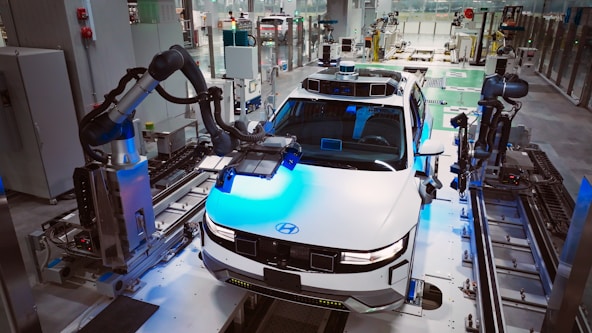
The Factory Floor is Getting Smarter
Manufacturing has always been about precision, efficiency, and scale. But the introduction of AI is pushing these principles into entirely new territory. Today's smart factories don't just produce goods — they learn, adapt, and optimize in real time.
At Techjays, we've seen firsthand how AI systems can transform operational workflows. From detecting micro-defects invisible to the human eye to predicting equipment failures weeks in advance, the impact is measurable and immediate.
Predictive Maintenance: Preventing Downtime Before It Happens
Unplanned downtime costs manufacturers an estimated $50 billion annually. Traditional maintenance schedules — whether reactive or calendar-based — miss the mark. AI changes this equation entirely.
By analyzing sensor data from vibration monitors, thermal cameras, and acoustic sensors, machine learning models can detect anomalies that signal impending failure. The result? Maintenance windows that are planned, not panicked. One of our clients reduced unplanned downtime by 73% within the first quarter of deployment.
Real-Time Quality Control
Computer vision systems powered by deep learning now inspect products at speeds no human team could match. These systems catch defects at the micron level, classify them by type and severity, and feed data back into the production line to adjust parameters automatically.
The shift from sampling-based QC to 100% automated inspection means fewer recalls, less waste, and higher customer satisfaction. For high-stakes industries like aerospace and automotive, this isn't a nice-to-have — it's becoming table stakes.
Supply Chain Optimization
AI doesn't stop at the factory walls. Demand forecasting models now incorporate everything from weather patterns to social media sentiment, giving manufacturers a clearer picture of what to build, when to build it, and where to ship it.
Dynamic routing algorithms optimize logistics in real time, while inventory management systems balance carrying costs against stockout risks with a precision that spreadsheets simply cannot achieve.
Getting Started
The path to AI-driven manufacturing doesn't require ripping out existing infrastructure. The most successful implementations start small — a single production line, a specific quality metric, one category of equipment — and expand based on proven results.
The key is choosing the right problems to solve first: high-impact, data-rich processes where AI can demonstrate clear ROI within weeks, not quarters.